
Nagoya is one of Japan’s principal centers of business, manufacturing, and transportation. Modern towers, broad avenues, historic landmarks, museums, commercial districts, and carefully ordered public spaces give the city a character distinct from Tokyo, Kyoto, or Osaka. Nagoya photographs best when you embrace its combination of industry, history, architecture, and contemporary urban design.
Many of our clients visit Nagoya for conferences, exhibitions, trade shows, corporate events, and international gatherings. When they have free time between scheduled activities, they often ask which places are genuinely worth seeing and photographing. Drawing on years of experience living and photographing throughout Japan, this guide narrows Nagoya down to ten locations offering a rewarding mix of landmarks, business districts, traditional scenery, historic neighborhoods, gardens, and modern architecture.
Each location carries one of three straightforward ratings so you can plan at a glance:
Must-Shoot – iconic or uniquely photogenic; make time for it.
Nice-to-Shoot – worthwhile when you are nearby or have some flexibility in your schedule.
Skip-It – interesting to visit, but not worth prioritizing when your time is limited.
Camera ready? Let’s explore some of Nagoya’s most photogenic places.
LOCATION 1 – NAGOYA CASTLE
Why go
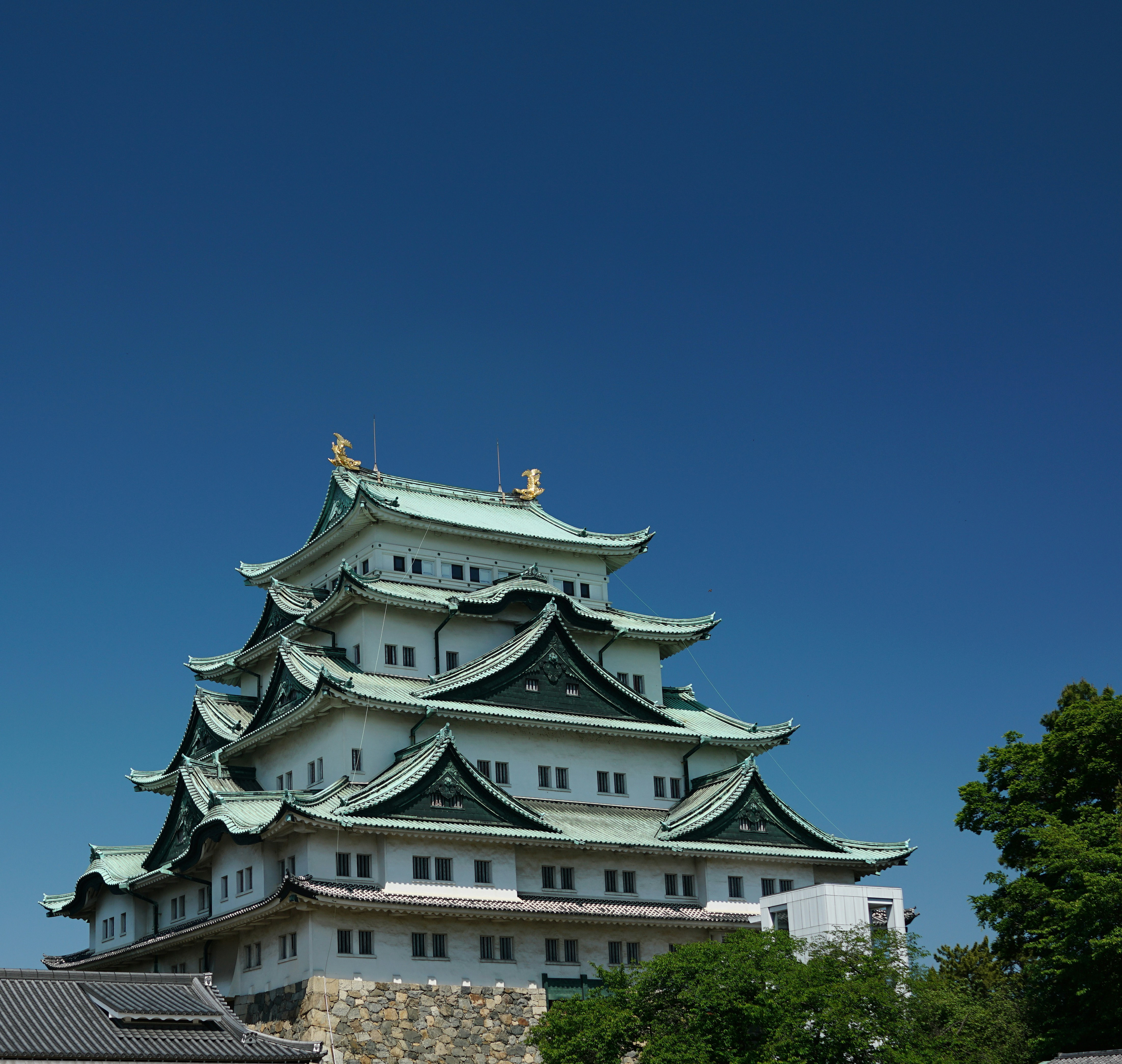
Nagoya Castle is the city’s most recognizable historical landmark. Its golden shachihoko roof ornaments, enormous stone walls, reconstructed main tower, surviving watchtowers, gardens, and seasonal trees provide a wide range of exterior compositions. The reconstructed Hommaru Palace adds elaborately decorated interiors and architectural detail beyond the familiar castle view.
The main tower keep is currently closed because of age and earthquake-resistance concerns, but the castle grounds, Hommaru Palace, and other accessible attractions remain open subject to current conditions.
Pro tips
• Timing: visit in the morning for cleaner light and generally lighter visitor traffic, particularly during the cherry-blossom season.
• Composition: use the stone walls, gates, moats, watchtowers, and trees to frame the main tower rather than relying entirely on the most obvious frontal viewpoint.
Best for
Nagoya’s definitive landmark photograph, castle architecture, seasonal scenery, and richly decorated palace interiors.
Rating: Must-Shoot
LOCATION 2 – SAKAE
Why go
Sakae is Nagoya’s principal shopping and entertainment district, combining department stores, commercial towers, illuminated signs, broad roads, busy intersections, and the landscaped spaces of Hisaya-odori Park. Its orderly architecture and open streets create a cleaner urban appearance than many of Japan’s denser entertainment districts.
Pro tips
• Timing: blue hour and evening generally provide stronger atmosphere than midday, particularly when the signs, storefronts, and surrounding towers are illuminated.
• Urban compositions: use glass façades, crosswalk markings, passing traffic, and reflections to introduce depth and movement without obstructing pedestrians.
Best for
Contemporary city scenes, polished commercial architecture, nighttime lighting, and Nagoya’s modern urban character.
Rating: Must-Shoot
LOCATION 3 – OASIS 21
Why go
Oasis 21 is one of Nagoya’s most distinctive modern structures. Its elevated glass roof, known as Spaceship-Aqua, holds a shallow layer of water approximately 14 metres above the plaza. The surrounding walkways, underground Galaxy Platform, reflections, and views toward Chubu Electric Power MIRAI TOWER create a compact collection of futuristic compositions.
Pro tips
• Timing: visit around sunset and continue into the evening, when the roof, plaza, and surrounding buildings become illuminated.
• Explore both levels: the elevated walkway offers water reflections and city views, while the lower Galaxy Platform provides strong symmetry and views beneath the glass structure. Check current rooftop operating hours before visiting.
Best for
Futuristic architecture, symmetry, reflections, and a recognizably modern Nagoya cityscape.
Rating: Must-Shoot
LOCATION 4 – CHUBU ELECTRIC POWER MIRAI TOWER
Why go
Completed in 1954, Chubu Electric Power MIRAI TOWER rises above Hisaya-odori Park and remains one of central Nagoya’s defining landmarks. It works equally well as an illuminated background element, an architectural subject, or an elevated viewpoint from which to photograph Sakae and the surrounding city.
Pro tips
• Use the surrounding park: photograph the tower through trees, lawns, pathways, and other elements of Hisaya-odori Park instead of limiting yourself to a direct architectural view.
• Evening visit: the tower and surrounding district become more distinctive after sunset. Check current observation-deck hours, lighting information, and maintenance closures before visiting.
Best for
A clean city-center landmark, illuminated architecture, and elevated views over Sakae.
Rating: Nice-to-Shoot
LOCATION 5 – ATSUTA JINGU SHRINE
Why go
With a history extending back approximately 1,900 years, Atsuta Jingu is one of Japan’s most significant Shinto shrines. Its wooded grounds, broad approaches, torii gates, traditional buildings, and quiet side paths provide a peaceful contrast to Nagoya’s commercial and industrial identity.
Pro tips
• Timing: visit early in the morning for quieter paths, softer light, and a more contemplative atmosphere.
• Photograph respectfully: remember that this is an active place of worship. Follow all posted photography restrictions and avoid obstructing prayers, ceremonies, shrine staff, or other visitors.
Best for
Woodland atmosphere, traditional shrine architecture, cultural context, and a quieter side of Nagoya.
Rating: Must-Shoot
LOCATION 6 – OSU KANNON & OSU SHOPPING DISTRICT
Why go
Osu combines the historic Osu Kannon temple with an extensive network of covered shopping arcades. Electronics stores, vintage clothing shops, restaurants, street food, subculture businesses, religious architecture, and everyday neighborhood activity create one of Nagoya’s most varied areas for street photography.
Pro tips
• Follow a natural route: begin at Osu Kannon and continue into the covered arcades, allowing the surroundings to shift gradually from temple scenery to contemporary shopping streets.
• Choose your atmosphere: weekends bring greater activity and street energy, while weekdays make it easier to create cleaner architectural compositions. Ask permission before photographing inside shops or taking close portraits.
Best for
Local street life, covered arcades, temple architecture, food culture, and Nagoya’s more informal personality.
Rating: Must-Shoot
LOCATION 7 – NAGOYA STATION / MEIEKI
Why go
The district surrounding Nagoya Station—commonly known as Meieki—is dominated by glass towers, hotels, offices, department stores, railway infrastructure, elevated walkways, and constant pedestrian movement. The environment is unapologetically modern and business-focused, making it especially suitable for corporate and metropolitan imagery.
Pro tips
• Seek elevation: public walkways and accessible upper levels can provide clearer views of the surrounding buildings, station entrances, traffic, and pedestrian movement.
• Timing: blue hour and nighttime introduce reflections and illuminated windows that give the district more depth than it usually has during midday.
Best for
Corporate architecture, modern transportation infrastructure, business-district atmosphere, and large-scale metropolitan scenes.
Rating: Nice-to-Shoot
LOCATION 8 – TOKUGAWA GARDEN
Why go
Tokugawaen is a traditional Japanese garden arranged around a central pond in the style of an Edo-period daimyo garden. Streams, waterfalls, rocks, bridges, wooded paths, seasonal flowers, and carefully composed views create a refined setting that feels removed from central Nagoya’s broad roads and commercial buildings.
Pro tips
• Seasonal highlights: fresh spring greenery, irises, peonies, and autumn foliage each create a different visual character. Check current flowering and foliage information before visiting.
• Use the landscape in layers: combine bridges, rocks, foliage, buildings, and pond reflections to create depth rather than photographing each feature separately.
Best for
Refined garden scenery, seasonal color, reflective water, traditional landscaping, and quiet architectural details.
Rating: Must-Shoot
LOCATION 9 – PORT MESSE NAGOYA / KINJO-FUTO AREA
Why go
Kinjo-futo is one of Nagoya’s principal exhibition and event districts. Its centerpiece, Portmesse Nagoya, contains major exhibition halls, meeting facilities, and event spaces used for trade shows, conventions, and large public events. The surrounding area includes broad pedestrian spaces, transportation infrastructure, large modern buildings, and the industrial scale associated with the Port of Nagoya.
This is not a destination to prioritize for traditional sightseeing, but it is highly relevant to conference and exhibition visitors already traveling to the area.
Pro tips
• Event context: exterior views of the halls, station approaches, directional signs, attendee arrivals, and surrounding structures can help establish the scale and location of an event.
• Check permissions: interior photography, professional equipment, and access to exhibition areas are controlled by the venue and individual event organizers. Confirm credentials and photography authorization in advance.
Best for
Conference coverage, exhibitions, trade shows, corporate events, and large-scale architectural context.
Rating: Nice-to-Shoot
LOCATION 10 – INUYAMA CASTLE & CASTLE TOWN
Why go
Located outside Nagoya in Inuyama City, Inuyama Castle is a designated National Treasure with one of Japan’s oldest surviving original wooden castle keeps. The nearby castle town retains its historic street layout and includes traditional buildings, shops, shrines, museums, and views toward the castle. Together, they provide a stronger sense of historic townscape than most locations in central Nagoya.
Pro tips
• Timing: arrive in the morning before the castle town’s main streets become busiest. Castle admission may be limited during periods of heavy visitor traffic.
• Allow sufficient time: combine exterior castle views, the interior keep, surrounding shrines, and the castle-town streets. Check current admission hours and transportation before traveling from Nagoya.
Best for
A half-day historical excursion, original castle architecture, traditional streets, elevated views, and a deeper look at the history of Aichi Prefecture.
Rating: Must-Shoot